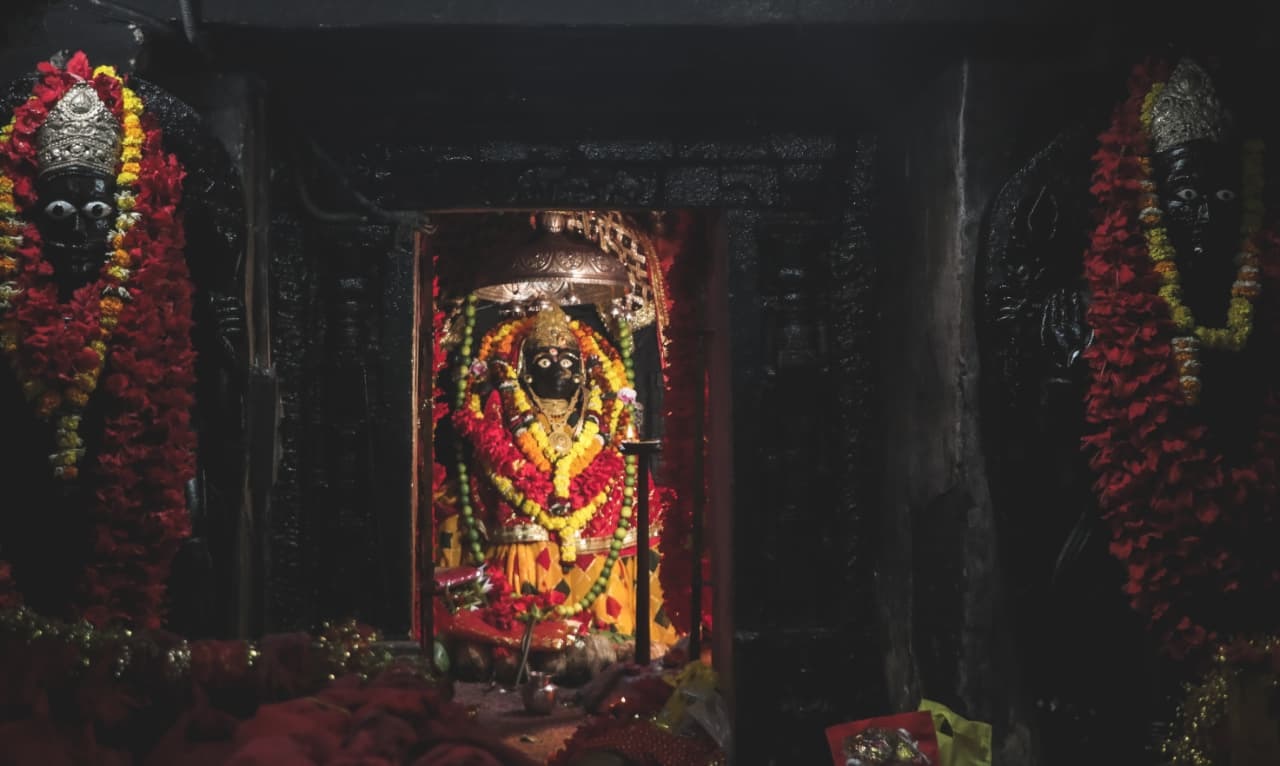
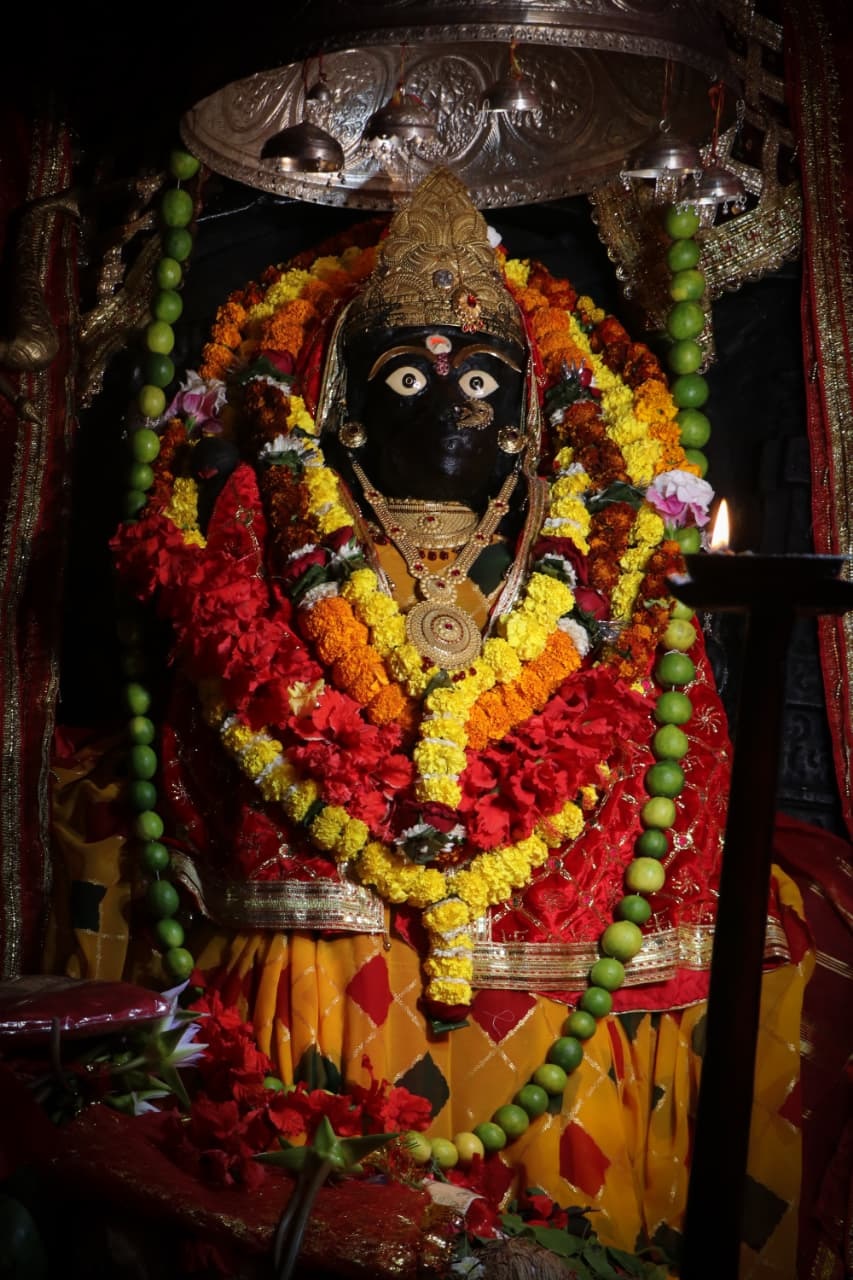
The Ancient Shakti Peetha of Manikya Devi – Danteshwari Temple, Dantewada
The Danteshwari Temple in Dantewada is an ancient Shakti Peetha dedicated to Goddess Manikya Devi, now widely known as Goddess Danteshwari.
Historical References in Inscriptions
Inscriptions of the Chhindaka Nagavanshi rulers dating from the 10th–11th centuries to the 14th century mention the kingdom of Chakrakota, which corresponds to present-day Bastar. In Chakrakota (Bastar), the town of Dantewada is situated at the foothills of the Bailadila hills, at the confluence of the Shankhini and Dankini rivers. At this sacred confluence stands the Shakti Peetha shrine of Goddess Danteshwari.
An inscription dated 1224 CE records that Jagadeka Bhushana (III) Narasimha Deva donated land to the Goddess. Another inscription from 1061 CE at the Bhairava Temple in Dantewada states that Chandraditya, a feudatory of Jagadeka Bhushana (I), donated Borigaon village to Bhairava Deva. In this inscription, the town is referred to as “Dattawada.”
These inscriptions confirm that temples of both the Goddess and Bhairava existed in Dattawada as early as the 11th century. The Danteshwari temple was also known as “Jagadagudi,” suggesting that Chhindaka king Jagadeka Bhushana I may have constructed it. The main idol in the sanctum is a six-armed Mahishasuramardini, which, based on archaeological features, is estimated to date to before the 8th century. Today, she is revered as Danteshwari Mai.
Original Name: Manikya Devi
Interestingly, the earlier name of Danteshwari was Manikya Devi or Manikeshwari Devi.
An inscription of Chhindaka king Jagadeka Bhushana I (1023–1063 CE) at Bhairamgarh mentions Manikya Devi. The 1210 CE inscription of the Battisa Temple at Barsur, issued during the reign of Someshvara Deva II, again refers to Manikya Devi. Additionally, inscriptions of the Hoysala rulers Vishnuvardhana (1116 CE) and Veera Ballala III (1205 CE) in Karnataka mention Manikya Devi of Chakrakota.
After the fall of the Chhindaka dynasty, Kakatiya rule was established in 1324 CE. A eulogistic verse of Kakatiya king Annamaraja Deva (1324 CE) mentions that he received a sword from Manikya Devi. His brother, the Kakatiya ruler Prataparudra of Warangal, is described as a devotee of Manikya Devi. In Bastar’s Kakatiya lineage, Maharani Meghavati (1410 CE) is described as a spiritual practitioner devoted to Manikya Devi. A copperplate grant of Bastar ruler Rajpal Deva (1709–1721 CE) also refers to the Goddess as Manikeshwari Devi.
These epigraphic records clearly establish that the present Danteshwari was known as Manikya Devi or Manikeshwari Devi in the inscriptions of the Chhindaka and Kakatiya dynasties.
One of the Eighteen Maha Shakti Peethas
In the “Ashtadasha Shakti Peetha Stotram,” which lists the eighteen principal Shakti Peethas of India, Manikya Devi of Chakrakota is mentioned as the twelfth among them. This confirms that the present Danteshwari Temple is one of the eighteen major Shakti Peethas of the country.
Belief of Sati’s Tooth Falling at Dantewada
There is a long-standing and ancient belief that one of Goddess Sati’s teeth fell at Dantewada. This is not a modern tradition. In 1324 CE, Kakatiya king Annamaraja Deva referred to the Goddess as “Manikya Devi Shubhadantikeshwari,” meaning the Goddess established at the auspicious place where Sati’s tooth fell.
In 1703 CE, inscriptions of Digpal Deva at the Dantewada temple refer to the Goddess as Dantavala and Dantavali Devi. Later records, including the 1709 CE and 1853 CE Bastar royal genealogies, still mention her as Manikya Devi. Over the past century or so, due to the belief associated with Sati’s tooth (danta), Manikya Devi became popularly known as Danteshwari or Dantesari.
In 1061 CE, the town was called Dattawada; today it is known as Dantewada.